Lost Cell Phone? Here’s How to Keep Your Finances Safe

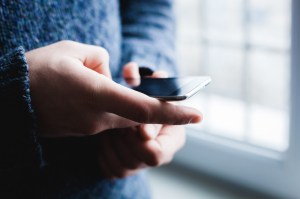
We depend on our cell phone for so many day-to-day tasks that go beyond communication. We keep track of our appointments, monitor our healthy lifestyle, and stay updated on breaking news. Additionally, our cell phones have become a hub for managing our finances.

The Federal Reserve reports that Americans use their smart phones or other mobile devices for a variety of monetary activities.

    • 51% of smartphone users had used mobile banking.
    • 24% of smartphone users had made a mobile payment.
    • 38% of mobile phone users had deposited a check using their phone.

Financial apps have made it faster and easier than ever to access your money on the go, and view all your financial information right from the palm of your hand.  But, what dangers could arise if you are one of the 5.2 million people who, in a year’s time, lose their smart phone or have their smart phones stolen? How can you protect your finances in the event that your cell phone ever goes missing?

Before your phone is ever compromised, take these precautions to prevent strangers from accessing your phone or the programs and apps it holds.

Passcode Protection: 62% of smartphone owners don’t have a passcode set to protect their phone. You should always set your phone or mobile device to lock when it’s not in use, and set a secure passcode or password for access to your phone. Some smartphones now let you take security even further and utilize your thumbprint or facial recognition to unlock your phone.

Activate Find My Phone: The Find My Phone feature on your smartphone allows you to quickly trace your phone’s location if it ends up missing. Your operating systems may also offer a lost mode. With this feature, you can send a message to your home screen asking anyone who finds your phone to call to you at a specified number.

If your smartphone is lost, quick action can be the difference between saving your financial information or months of headache if your accounts are accessed by a stranger. Take these actions as soon as you realize your phone is gone.

Contact Your Financial Institution: Let your financial institution, credit card companies, and lenders know your phone or device is missing and someone may have access to your account information. They can flag your account as “compromised,” freeze your accounts, or monitor suspicious activity.

Change Your Passwords: Use your desktop computer or another mobile device to reset the passwords for your online banking or payment tools. Also reset your email password. This way if someone uses the “Forgot My Password” feature on any financial app or website, they cannot access your email and reset your passwords themselves.

A Final Tip: Always log out of financial websites or apps before you close out of them. Keeping yourself logged in or enabling auto sign-in means that your information is easily accessible, even if you’re not the one holding your device.

If you feel that any of your First Financial accounts may have been compromised as a result of a lost or stolen cell phone, please contact our Member Relationship Center at 732-312-1500, Option 9 Monday through Thursday 8:30am-5pm EST, Friday 8:30am-6pm EST, or Saturday 9am-12:30pm EST.

Article Source: Kara Vincent for CUInsight.com
Watch Out for Card Skimming at Gas Pumps

The FTC is warning drivers about skimming scams at the pump. Typically, we New Jersey drivers don’t pump our own gas – but if you plan to take any Fall road trips to enjoy the foliage in another state, you might want to be on the lookout for the following gas pump scam.

Skimmers are illegal card readers attached to payment terminals. These card readers grab data off a credit or debit card’s magnetic stripe without your knowledge. Criminals then sell the stolen data or use it to buy items online. You won’t know your information has been stolen until you get your statement or an overdraft notice.

Here are a few tips to help you avoid a skimmer when you fuel up out of state:

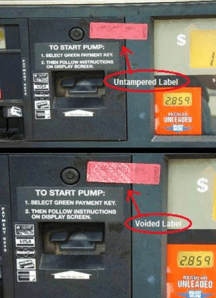
Make sure the gas pump panel is closed and doesn’t show signs of tampering. Many stations now put security seals over the cabinet panel. If the pump panel is open, the label will read “void.”

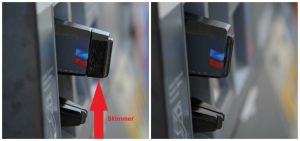
Look at the card reader itself. Does it look different than other readers at the station? For example, the card reader on the left has a skimmer attached, the reader on the right does not.

Try to wiggle the card reader before you put your card in. If it moves, report it to the attendant. Then use a different pump.

  • If you use a debit card at the pump, run it as a credit card instead of entering your PIN. That way, the PIN is safe and the money isn’t deducted immediately from your account if there is a card skimmer attached. Better yet, if you have a credit card on you – use that instead.
  • If you’re really concerned about skimmers, pay inside rather than at the pump.
  • Monitor your credit card and bank accounts regularly to spot unauthorized charges.

If you feel that any of your First Financial accounts may have been compromised as a result of a scam, please contact our Member Relationship Center at 732-312-1500, Option 9 Monday through Thursday 8:30am-5pm EST, Friday 8:30am-6pm EST, or Saturday 9am-12:30pm EST. Learn more about card skimming by checking out our YouTube Video.

Article source: Colleen Tressler for the Federal Trade Commission

Important Member Alert: Mail Fishing Scams

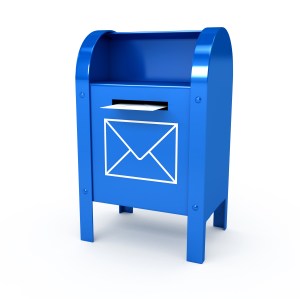
There has been a fraud concern growing in New Jersey called Mail Fishing. Tools covered with sticky substances are being utilized to pluck bank documents and checks out of large blue postal collection boxes. The post office claims they are implementing innovative methods to protect mail, such as replacing collection boxes with new models. Here’s how to keep your mail safe, and additional precautions to take if you’re using a collection box.

5 ways to protect your mail

  • Don’t use a collection box. Instead, use the letter slots inside a post office to drop off mail, or hand it to a letter carrier.
  • Don’t leave mail in your mailbox overnight, especially if you’re expecting checks or credit cards. The U.S. Postal Service discourages sending cash through the mail.
  • Ask your bank for “secure” checks that can’t be altered.
  • If you can’t be there to pick up your mail, make arrangements for someone you trust to pick it up, or contact your post office to hold your mail while you are out of town.
  • Didn’t get that check you were waiting for? Report suspected mail theft immediately to police, then call Postal Inspectors at 877-876-2455 (press 3).

3 ways to use collection boxes safely

Police are discouraging the public from using collection boxes altogether due to these recent security concerns. However, if you must use a collection box, here are the best practices according to police and the U.S. Postal Service.

  • Pay attention to collection times. Last collection for the day is typically at 5pm. If mail is deposited afterward, it will sit vulnerable until the next business day.
  • Avoid dropping mail in collection boxes over holiday weekends, or on nights before holidays. Fishing incidents are most common on Sunday night, according to police.
  • Speak with your local post office or mail carrier to determine which collection boxes in your area are up-to-date with security regulations. Certain collection boxes in New York have been retrofitted with security measures after a rash of mail fishing in the area in 2017.

If you think you were a victim of fraud, identity theft or another mail-related crime, report it at postalinspectors.usps.gov, or call 877-876-2455.

We encourage our members to utilize online banking resources to monitor statements electronically, and pay bills right online, so as to not fall victim to this type of fraud.

If you feel that any of your First Financial accounts may have been compromised as a result of a scam, please contact Member Services at 732-312-1500, Option 9 Monday through Thursday 8:30am-5pm EST, Friday 8:30am-6pm EST, or Saturday 9:00am-12:30pm EST.

Article Source: Jessica Presinzano for northjersey.com


4 Items You Should Never Carry in Your Wallet

When it comes to your wallet – there are some things you should surely throw away, and there are others you should take out and file away immediately to prevent identity theft.

Social Security Card

It may seem obvious to not carry this with you, but many people have long kept their SS card in their wallet. But think about it, if you have your number memorized, which most of us do, when do you actually need your card? Have you ever had to present your card to someone? Carrying this information around with you is a bad idea. If the wrong person gets ahold of your social security number, you could end up with loans opened up in your name and new credit card accounts.

Passwords

It seems every website we visit now requires a password. How are we ever supposed to keep up with them all? It’s a great idea to have a cheat sheet where all your passwords are kept, but do not be tempted to keep this information in your wallet. Instead, keep your notes at your desk, locked in your phone, or filed away somewhere at home with other sensitive information.

Credit Cards

Many of us are way past the point of having a credit card just for “emergencies.”  It’s hard to check out at any retail store without being asked if we’d like to “save 10% by opening up a store credit card.” No matter how many cards you have, it’s wise not to carry all of them in your wallet at once. Think about it: if your wallet is stolen or lost, would you want someone to have access to every account you have? Instead, keep one card with you for those emergencies and leave the others at home in a safe place – unless you are specifically going to that particular store. This can also keep you from making spur of the moment purchases you’ll likely regret.

Receipts

Once you get home from a store after making a purchase, decide right then if you need to hold on to the receipt. Is there a chance you’re going to return the item? If not, then toss the receipt right away. If it is a larger purchase or some type of home technology, you may want to keep the receipt until after the purchase shows on your next credit card statement, to ensure you were charged the correct amount and that the item functions properly.

Article Source: Wendy Bignon for CUInsight.com

3 Consumer Scams to Be Aware Of

New twist on an old phone scam:

Phone scams are nearly as old as Alexander Graham Bell, but fraudsters have invented a new trick to beware of. It’s called the “can you hear me” con.

Scammers will call your phone and ask if you can hear them, but if you answer yes, they’ll record you and use it as “proof” that you signed up for whatever fraudulent service they’re offering.

The safest thing you can do if you receive one of these calls is to simply hang up, or if you don’t know the number – don’t answer it in the first place.

When heart meets wallet – dating scam:

Nothing says I love you less than an empty bank account, yet that might be your fate if you go looking for love in all the wrong places.

According to the FBI, scammers are preying on people’s hearts and wallets in a new growing trend called romance scams. It starts off simply enough — you meet someone through the service that seems a likely match and contact is made. Things intensify quickly. It seems like a dream romance. It’s not.

Beware of anyone you meet through online dating services who asks for financial gifts or favors (even if he or she is the “love of your life.”) This could be a play to get access to your checking account.

These scammers will leave you broke and broken hearted if you’re not careful. Use your head and be a bit suspicious. If it seems too good to be true, it probably is.

Don’t fall for the bait with phishing:

The chairman of Hillary Clinton’s presidential campaign, fell for a phishing scheme when he reportedly received an email from Google asking him to verify his account.

Unfortunately, the email wasn’t from Google, but was from a scammer — a scammer who now had all the info he needed to hack this Google account.

Software like Photoshop makes it easy for even a mediocre hacker to convince you that they are with a trusted organization like Google, your bank, or another company who handles sensitive matters for you.

Before you give over info, even basic info – remember the painful lesson learned: email isn’t secure. Never share sensitive information over email.

Article Source: Jennifer Reynolds for CUInsight.com

4 Signs That a Charity is Probably a Scam

Many of us donate to a worthy cause year round. Unfortunately, just as there are good people trying to help others, there are also plenty of scammers out there. You want to feel good about where your money is going, and you want to make sure that you aren’t just lining the pockets of some fraudster. As you field phone calls and receive information from those purporting to help the less fortunate, watch out for the following red flags that might indicate you are dealing with a scam:

1. High-Pressure Phone Tactics

Someone insisting that you give money now, over the phone, is a huge red flag that you are probably dealing with a scam. Most legitimate charities don’t employ high-pressure sales tactics that make you feel like you need to donate immediately.

In some cases, scammers insist that you have to just donate, and they tell you time is too short to send you literature or let you look at a website. If a caller gets frustrated and tries to tell you that you need to donate immediately, hang up the phone.

Legit charities usually have no problem with you saying no. The caller might tell you they are under a deadline for a match, but they won’t pressure you, and once you say you need time to think about it, most legit charities will thank you and move on.

2. No Website

Who doesn’t have a website these days? Scammers, that’s who. If you get a phone call from an organization, and you can’t find a website, that’s a red flag. Most legit charities have websites that describe their mission, who they help, and even include success stories. Even local charities usually have a basic website that allows you to see where they are located and what their needs are.

If an organization doesn’t have a website, that’s an immediate red flag. That’s not to say that every worthy cause would have a website, but it simply means you need to investigate further. Legit charities want people to know they are out there and accept donations.

3. They Won’t Provide You with Their Tax ID

Charities have to apply to be tax-exempt organizations and you can call IRS to verify their legitimacy. If someone over the phone just cannot provide their Tax ID or there’s no way to find that out before you send money, then this is a major red flag. And it’s not totally safe just because they gave you a bunch of numbers either. Call 877-829-5500 to see if the charity is claiming to be who they are. This is also the definitive source for making sure your donation is tax deductible.

4. No One Wants to See You

Watch out if a caller doesn’t want to let you know where they are located. Ask to stop by if they claim to be local. Or, you can ask for a mailing address to send a donation. Legitimate charities are happy to let you have a tour or send them a donation through the mail.

Scammers, though, don’t usually have a mailing address. And they certainly don’t want you anywhere near their base of operations. When an organization comes up with an excuse as to why you can’t visit or send a donation to an address, you should watch out. There’s a good chance you’re dealing with a scammer.

If you are still unsure, you can check Charity Navigator or GuideStar for information about charities and how effective they are, including how much of their resources go toward actually helping others.

There are many worthy causes that deserve your dollar’s attention, but you need to pay attention in order for the real charities to benefit the world. Do your part by taking time to vet out the details and you won’t be sorry to hear that your donations only enriched someone without really helping those in need.

Article Source: Miranda Marquit for MoneyNing.com