

5 Ways to Whip Your Budget Into Shape for the Holidays

Безымянный-2Holiday shopping is officially in full swing – but that certainly doesn’t mean you need to go broke over it. Here are just a few financial tips to whip your budget into shape for the holidays without sacrificing gift giving or your other financial goals.

Reflect on last year. If last year’s shopping season was a budget-busting disaster, then now is the time to learn from your mistakes. Take a look at your holiday bills from a year ago and think about whether your financial situation has improved or worsened since then. Be honest with yourself. Are you really up for a repeat spending performance this year? If not, start thinking about how much you can realistically afford to spend, and make sure it’s reflected in your new holiday budget.

Set a dollar amount. And stick to it! While holiday spending often feels essential, it’s easy to get swept away in the shopping frenzy and end up spending more than you can afford. So before you start shopping, use this opportunity to develop a realistic budget where you designate a specific dollar amount for each item or person on your list. Easily create, manage, and stick to your budget using a free online personal finance management tool that can also help you manage your money on the go.

Track receipts. You’ll need them for returns, price adjustments, and to compare against your credit card statement. Knowing how much you spent will keep you honest and help you plan better for future holiday shopping too. Tally the receipts from all holiday expenses, including gifts, postage, meals, entertainment, and decorations. Assess where you’ve spent and once you’ve completed your shopping list, stop shopping!  More mall or web time can amount to more spending.

Limit your use of plastic. Unless you know you’re good about paying off your credit card balances in full each and every month, leave the plastic at home. Only bring cash you’ve set aside for holiday shopping to avoid temptations for unnecessary purchases. If you must use credit this year and know you won’t be able to pay everything off right away, try this approach: Don’t rely solely on credit; make a plan in which you pay your purchases off completely within two to three months; and limit your credit card use to the card in your wallet with the lowest interest rate.

Did you know First Financial has a lower rate VISA Platinum Cash Plus Credit Card, great rewards, and no annual fee? Apply today!*

No emotional purchases. Let’s face it, if you’re stressed out, you might make some unnecessary purchases. Take the emotions out of your holiday shopping, and stick to your original holiday budget. Having your budget in hand and a game plan for who you are buying for and what you want to buy, can help make the daunting task of shopping a bit more manageable. It’s also worth doing a little online research and comparison shopping before leaving the house, so you don’t get caught up on the hype of the holiday sales.

So why not take a different approach this year? By following some of these tips ahead of time you’ll be able to balance your gift giving and still avoid that holiday debt hangover.

To save for holiday shopping next year, check out First Financial’s Holiday Savings Club Account – don’t put yourself into debt over holiday spending, save ahead and come out on top (and not in debt)!**

  • Open at any time
  • No minimum balance requirements
  • Dividends are posted annually on balances of $100 or more
  • Accounts automatically renew each year
  • Deposits can be made in person, via mail, payroll deductions, or direct deposit
  • Holiday Club funds are deposited into a First Financial Checking or Base Savings Account

*APR varies up to 18% for purchases, when you open your account based on your credit worthiness. The APR is 18% APR for balance transfers and cash advances. APRs will vary with the market based on the Prime Rate. Subject to credit approval. Rates quoted assume excellent borrower credit history. Your actual APR may vary based on your state of residence, approved loan amount, applicable discounts and your credit history. No Annual Fee. Other fees that apply: Cash advance fee of $10 or 3% of the total cash advance amount—whichever is greater (no maximum), Balance transfer fee of $10 or 3% of the balance—whichever is greater (no maximum), Late Payment Fee of $29, $10 Card Replacement Fee, and Returned Payment Fee of $29. A First Financial membership is required to obtain a Visa® Credit Card and is available to anyone who lives, works, worships, or attends school in Monmouth or Ocean Counties.

**A $5 deposit in a base savings account is required for credit union membership prior to opening any other account. All personal memberships are part of the Rewards First program and a $5 per month non-participation fee is charged to the base savings account for memberships not meeting the minimum requirements of the Bronze Tier. Click here to view full Rewards First program details, and here to view the Tier Level Comparison Chart. Accounts for children age 13 and under are excluded from this program.

Article Source:

Holly Perez of Money.usnews.com, http://money.usnews.com/money/blogs/my-money/2014/11/20/5-ways-to-whip-your-budget-into-shape-for-the-holidays

How to Avoid Gift Card Fraud This Holiday Season

gift cardGift cards will be the most requested gift this holiday season for the eighth consecutive year, the National Retail Federation reports. Unfortunately, this also creates an opportunity for fraudsters who want a piece of an industry worth hundreds of billions of dollars per year.

Just ask James Bregenzer, 32, of Chicago, who purchased a $500 airline gift card as a Christmas gift a few years ago for his mother – who was planning a trip to Disney World. After he brought the gift card home from the grocery store where he purchased it, he noticed the PIN area on the back of the card was scratched off, so he called the airline. “I asked if there was any way they could exchange my gift card for a new one, use it to purchase a new one or otherwise protect my purchase with the potentially compromised PIN,” he said.

The airline said there was nothing it could do for him and suggested he use the gift card immediately while it still had its $500 value, but his mother didn’t know her travel dates yet, and he wanted to save the gift for Christmas. Sure enough, when she tried using the card just a week later, it had a zero balance.

Watch Out When Buying or Redeeming

Gift card fraud can happen when a gift card is purchased or redeemed, according to Pete Kledaras, chief risk officer at CashStar, a gift card platform that works with hundreds of major retail brands. Thieves can purchase a physical or digital gift card using a stolen credit card or simply steal the gift card number and PIN and leave the physical gift card. In the latter case, thieves will typically use the balance themselves. “Once cards are stolen, there are any number of ways that thieves can turn that into money for themselves,” Kledaras says. “They can re-sell them, or they can go into the store and purchase physical goods that they can sell.”

Another example of gift card fraud is when a thief tries to return stolen merchandise, and the retailer issues a gift card as a refund. “The criminal is getting $75 cash back from an item that they never purchased in the first place,” says National Retail Federation spokeswoman Kathy Grannis. Then the schemer might turn around and sell that gift card for cash.

To make sure you don’t become a victim of gift card fraud this season, follow these tips:

For the Giver

  • Only buy from trusted sources. Gift card resale markets offer gift cards for less than the face value of the card, but not all of them guarantee the stated value. For example, if the original purchaser still has the gift card and PIN, he or she may be able to use the gift card online even after selling it. Or, if the retailer discovers the gift card was purchased using a stolen credit card, it can cancel the gift card. To avoid these potential issues, Kledaras recommends buying directly from the retailer issuing the gift card. “If you want to buy a Best Buy gift card, it’s best to buy it from Best Buy,” he says.
  • Watch for signs of tampering. In the past, Grannis says thieves would walk into stores and write down the numbers of the gift cards on display. “Since that was first discovered, large retailers have taken steps to remove any opportunity for criminals,” Grannis states. If a card is not in plastic casing, make sure the PIN hasn’t been scratched off. Digital gift cards are also becoming increasingly popular and don’t have potential for physical tampering.

For the Recipient

  • Register your gift card. Some retailers, including Crate and Barrel and Starbucks, allow gift card holders to register their gift cards and protect the balance in case the card is ever lost or stolen. Not all merchants have this option, but if yours does, it’s a good idea to register the card just in case.
  • Treat gift cards like cash. Many states prohibit gift cards with expiration dates, but it’s still a good idea for the recipient to use the card sooner rather than later. This helps not only to prevent fraud, but also to avoid losing or forgetting the gift card. “It’s like having cash sitting on a table,” Kledaras says, “and you want to use it before something happens to it.” In fact, advisory company CEB estimates that over a billion dollars in gift cards were unredeemed in 2013. So it’s better to get the value out of the gift card now than later, when the retailer may be out of business or you misplace the gift card.

Help – I spent too much on the holidays and I’m still paying for it months later!

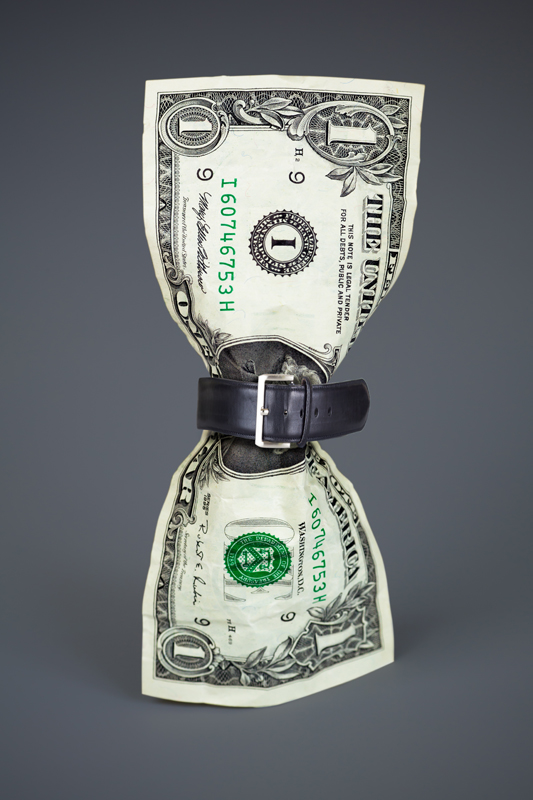
tighten belt on dollar conceptIf the holidays have left your budget overstretched, there are ways to recover (even if 3 months have passed) … you just need to act as quickly as you can.

While it might be tough to admit it (case in point: you’ve ignored the debt you racked up over the last few months), the first step to reducing your post-holiday debt is realizing and prioritizing it.

Beverly Harzog, author of Confessions of a Credit Junkie, says the best way to start a re-payment plan is to go after the debt on the highest interest rate card first and once that is paid off, go after the next one and so on and so on.

If you overspent this holiday season and know you won’t be able to pay off your credit card bills when they arrive next month, you need to adjust your spending habits ASAP.

Consumers should look at their spending categories and aim to shave small amounts off of each area (even if it’s $5 or $10 to start). Making many small cutbacks will be less painful than trying to find an extra $1,000 all at once to help pay off the credit card balance.

If you put a lot of your holiday gift spending on a high-interest rate credit card, Harzog recommends transferring the balance to a credit card with a lower interest rate. Even if you can reduce the interest rate just a little bit, it will help pay it down faster.

If you are facing significant debt, it might be time to find new ways to generate extra income that is earmarked solely to paying off the debt. If you don’t want to get a traditional part-time job, review your talents and skill set to find alternative ways to make money, whether it’s giving piano lessons, fixing computers, catering, or doing web design.

Ed Gjertsen, Vice President at Mack Investment Securities, recommends the seven-day cash challenge to break an overspending habit. With this challenge, you estimate how much money you spend each week and then take out that amount of cash at the start of the week and see how long it lasts.

“When people do this, by Wednesday or Thursday they are usually out of money,” he says. “They don’t think of all the times they swipe that card. It gives them a reality check of how much they are spending.”

new%20ncua%20disclaimer-resized-600equal%20housing%20lender%20logo-resized-600