How to Avoid Winter Utility Scams

In a recent blog, we shared ways to spend less money on winter utility bills. This week, we’re focusing on winter utility scams. Just this fall, PSE&G released an alert that scammers were impersonating their representatives, noting 1,000 of their customers in 2022 reported being a victim of a scam. That’s why it’s so important to be aware of the warning signs and develop strategies to avoid any future scams from happening to you.

What is a utility scam?

A utility scam is when someone pretends to be your utility company to take your money. It can look like a call from your gas, electric, or water company threatening to cut off your service if you don’t pay a bill immediately. It could be an individual impersonating a utility company employee at your door saying they need to repair equipment and that you have to pay on the spot. It could also be someone calling for your information to process a bill.

How to avoid a utility scam

Knowing the signs is the first step in avoiding a scam. If you ever feel uneasy about an email, phone call, or visit from your utility provider – trust your instincts. Chances are you’re getting contacted by a scammer. Here are signs of a winter utility scam to look out for.

  • Threats of disconnecting your service if a bill is not paid for within the hour
  • Requests of an immediate payment through a payment app, gift card, or even Bitcoin
  • Requests for personal or card information
  • In person demands for payments and high pressure door-to-door sales
  • Offers of products or services with drastic, too good to be true savings

Do your research! If you see an offer from a utility company, search them online with words like “scam” or “reviews.” It’s also recommended that you get any offers or savings in writing before accepting or signing a contract.

What to do if you encounter a scam

If you’re contacted by a fake utility company (or suspect you were), contact your current service provider, report it to the Federal Trade Commission (FTC), and contact your state attorney general. It’s also recommended that you let others know about the scam so they can avoid it too. If you’ve already paid a scammer or gave them your personal information, contact your bank immediately. The FTC also has a handy guide for victims of a scam with advice and resources.

You can count on First Financial to go above and beyond to help you avoid fraud and protect your finances. If you ever see something suspicious, you can always contact one of our financial experts to help you determine if the offer, website, or service is legitimate. Contact our member services department at 732-312-1500 or visit one of our branches.

Get scam savvy and look out for fraud trends by subscribing to First Financial’s monthly newsletter.

Social Media Quizzes Can Lead to Phishing Attacks

We’ve all seen the quizzes, games, and survey questions asked on social media such as what was your first car, your pet’s name, your high school mascot, which character are you most like, and so on.

Personality tests, surveys, and online quizzes ask seemingly innocent questions, but the more information you share online over a public forum like Facebook – the more you risk it being misused. Scammers could do a lot of damage with just a few answers that give away your personal information, especially details that are often used as answers for online security questions.

This type of scam is called phishing, which is the fraudulent practice of sending emails or other messages that appear to be from reputable companies in order to get individuals to reveal their personal information.

What can scammers do with the answers to your online quiz questions?

  • Use your quiz or survey answers to try and reset your online accounts and passwords.
  • Potentially gain access to your bank account once they have the answers to your security questions that you have posted online.
  • Hack into your social media accounts by being able to answer security questions from online quiz responses, and then send malware links to your followers with another shared “quiz.”

Here are some ways you can protect your personal information on social media:

  • Maintain strong passwords and use multi-factor authentication when logging into your social media and online accounts.
  • Keep your social media profiles private – anyone can see what you are posting if you have a public page, and you won’t know who’s looking. Also refrain from listing your personal contact information and where you live on your social media accounts.
  • Steer clear of online quizzes and questions, or don’t answer them truthfully using the same answers you would use in online banking or other related account security questions.
  • When online accounts do require security questions, treat these answers like you would with other secure account passwords. Do not share this information with anyone.

If you suspect an online quiz might be a phishing scam, report it to the FTC at https://reportfraud.ftc.gov/#/

At First Financial, our goal is to help protect our members from scams and identity theft. If you have any concerns or questions about any of your First Financial accounts, please call member services at 732.312.1500 or visit one of our branches.

Article Source: FTC.gov

Online Marketplace Scams Target Both Buyers and Sellers

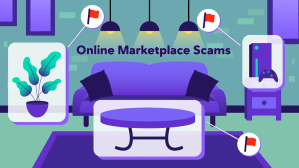
Whether you’re looking for a houseplant, a coffee table, or a new gaming console, online marketplaces can be great places to start. But be careful. Anonymous listings and virtual transactions are ripe for online marketplace scams, which can take a variety of forms.

You May Not Get What You Paid For

If you pay in advance for something you have not seen in person, the item may not arrive as advertised. In fact, it may not arrive at all. A picture of a cute puppy or designer jewelry is easy to post in a marketplace, but if you pay without knowing the seller personally or seeing the product, the seller can take your money and disappear.

Payment Type Matters

Pay attention to listings that insist on an unusual payment method, such as gift cards. Gift card numbers are hard to trace, so if you don’t get what you paid for and the seller’s profile has disappeared from the marketplace, it will be very difficult to track them down or get your money back. Also keep in mind that with many digital payment methods, once you send a payment it often can’t be reversed, making it even more important that you know who you are dealing with and what you are buying.

Scams Targeting Sellers

While many people are aware of scams targeting buyers on marketplace sites, sellers can get scammed too. One tactic is for scammers to fake payment receipts or confirmations with an amount that’s higher than the asking price. The supposed buyer may claim to have purchased a product above your listed price and request a refund without actually having placed an order.

Another marketplace scam growing in popularity involves a fake email appearing to be from Zelle®, claiming that a transaction cannot be completed until your Zelle® account is upgraded. In reality, the scammer is tricking you into paying them for an upgrade that doesn’t exist. Zelle® does not offer account upgrades.

Warning Signs: What To Watch Out For

  • Unreasonably low prices – Sometimes an incredibly low price is literally too good to be true. In most instances, it’s best to pass on this type of offer unless you can inspect the product in person and ensure its authenticity.
  • Sales pressure – If the seller creates a sense of urgency by warning that the item won’t last long or many others are interested, take your time and think it through. Creating urgency is a technique to get you to act on impulse instead of logic, and it could lead you to overlook something suspicious.
  • Fake profiles – Keep an eye out for telltale signs of a false profile, like a generic profile picture, only one friend or connection, or a profile name that does not match the name or email address on the invoice.

Slow Down, Ask Questions

When it comes to making safe marketplace purchases, remember to slow down and ask questions. If you detect suspicious activity, report the user to your marketplace platform.

At First Financial, our goal is to help protect our members from scams and identity theft. If you have any concerns or questions about any of your First Financial accounts, please call member services at 732.312.1500 or visit one of our branches.

To learn more about scams and ways to protect yourself, visit zellepay.com/pay-it-safe.


Zelle and the Zelle related marks are wholly owned by Early Warning Services, LLC and are used herein under license.


Scams 101: What to Look Out for During the Holidays

Now that Thanksgiving has passed, holiday shopping is in full swing. Even though inflation will affect consumer spending and shopping habits, holiday sales are still expected to reach $1.45 to $1.47 trillion this year. And as with any big shopping event, it’s expected that fraudsters will find ways to scam consumers.

Every year, scammers use similar tactics to trick shoppers. While some are more obvious than others, it’s important consumers stay aware of common holiday fraud patterns so they can protect themselves and their finances. Here’s what you should be on the lookout for this holiday season.

Online holiday shopping fraud

Malls and local department stores can be overwhelming this time of year, so it’s no surprise more individuals are choosing to shop online. In fact, e-commerce sales are expected to increase 14.3% and hit up to $264 billion. Convenience is key when it comes to shopping, but that means there’s more to be on the lookout for too – including scam e-commerce shops.

When looking for specific out-of-stock or pricey items, it may be tempting to purchase a version found on a website resembling a legitimate store. However, these scam shops can take your personal and payment information and then never actually ship the item. Fraudulent e-commerce websites are more common than you think. These fake sites mimicking legitimate stores grew 178% in 2021 with 5,300 new websites per week.

Trust your gut. If you see a site like this, do a thorough Google search to see if the company has legitimate reviews. If you see others mentioning it looks fake or is a scam, do not buy any items from their website.

Online banking scams

More than 65% of people use an online banking service to manage their finances. And as digital services have gotten more popular, scammers are using smarter con methods to access an individual’s finances or take their identity. Here are major online banking scams to look out for.

  • Loan scams: When scammers pretend to be a legitimate bank offering a low-rate loan through an email or convincing website. This is a way for them to take your information and access your bank account.
  • Wire fraud in real estate: A scam where someone will use already occurring real estate transactions to hack the company and make wire transfers to themselves. These transactions can seem legitimate and go undetected if not monitored.
  • Fraudulent checks: When an individual is used as a mule for fraudulent checks. This will look like an email or message from someone they know, asking the person to help by opening a bank account and cashing a check, and promising them a portion of the money. These checks will bounce and cause the victim’s account balance to go negative.

 Related Article: How to Avoid Banking Scams and Stay Safe Online

Seasonal job scams

With the increasing number of remote work opportunities, job seekers are vulnerable to employment scams. Typically with seasonal jobs, you might think of retail or restaurant gigs – but e-commerce roles are also becoming more popular. These scams can look like typical remote work, but contain promises that seem too good to be true. Oftentimes the company will ask you to cover work expenses upfront with the promise of paying you back through a check or transfer. With any job listing you’re applying to, it’s crucial you do extensive research on the company and assess if this is a legitimate opportunity.

Travel and vacation fraud

Holiday travel and family vacations are a desired market for fraudsters. In 2021, there were over 4,000 mentions of fraudulent airlines and hotel offers featured on the dark web. With such a large industry – travel fraud can take on many forms, including frequent flyer mileage scams, currency exchange, bogus travel agencies, rental cons, fake hotel or flight listings, and more. This is yet another way for scammers to take your information and access your finances. When it comes to travel (and any purchase), it’s important to buy from websites and companies you know and trust. If you see a package deal, do your research to ensure it’s a real offer.

You can count on First Financial to go above and beyond to help you avoid fraud and protect your finances. If you ever see something suspicious, you can always contact one of our financial experts to help you determine if the offer, website, or service is legitimate. Contact our member services department at 732-312-1500 or visit one of our branches.

We hope you have a safe holiday shopping season!

Want to see more articles like this? Subscribe to First Financial’s monthly newsletter for financial resources and advice.

Don’t Fall for a Utility Scam This Holiday Season

‘Tis the season for utility cutoff scams to ramp up. If you get a text, email, or phone call from your “utility company” threatening to shut off your power for non-payment this holiday season, don’t panic – it’s most likely a scam.

Threats to Turn Off Water and Power Could Be the Work of Scammers

Many basic necessities rely on utilities we take for granted, and that makes them perfect for a scammer to exploit. Like many other scams, utility scams occur when a scammer pretends to be someone they’re not. In this case, the scammer poses as a representative from your power or water company and threatens to turn off your services unless you send payment right away or provide some important personal information.

Different Approaches, Same Intent

These scams can happen through email, over the phone, via text message, and in person. In some cases, the scammer may report you’ve overpaid for services and ask for a bank account, credit card, or utility account information to allegedly issue a refund. Remember that your actual utility company would already have this information. What’s more likely is that the scammer is trying to get your personal account information to commit fraud.

Utility scams typically include an urgent notice threatening to cancel your service due to a missed payment – leaving you without heat, air conditioning, or water. Scammers use urgency to create panic and scare you into acting fast without thinking or confirming the authenticity of the situation.

Individuals posing as utility workers may even show up at your home for a fake inspection or equipment repair, investigate a supposed gas leak, or conduct a “free” audit for energy efficiency. They will try to charge you for the fake service, sell you unnecessary products, or collect personal information to use in identity theft activities. Don’t fall for these tactics, your actual utility company would not operate in this manner.

Fast Payments Work in Scammers’ Favor

Since electronic payments are a fast way to send money and often can’t be reversed, the scammer may say that they need immediate payment via bank wire, gift card, or digital payment apps like Venmo or Zelle® to keep your utilities running. These scams are often timed for maximum urgency, such as peak heating or air conditioning seasons, or right before a big holiday celebration like Thanksgiving.

How to Protect Yourself

Watch for these warning signs to detect a utility scam in progress:

  • An unscheduled or unsolicited call or visit from someone claiming to represent your power or water company. No matter how great the offer or frightening the situation sounds, decline any action until you can verify its authenticity.
  • Threats to cut off service unless an overdue bill or maintenance cost is paid immediately. Most utility companies send multiple notifications before canceling service.
  • Requests for personal account information or payment via bank wire, gift card, or digital payment apps like Venmo or Zelle®

If you experience any of these situations, follow these steps:

  • Slow down and ask questions, like what the individual’s employee identification number is or ask them to confirm the date and amount of your most recent payment.
  • Do not respond to text or email messages threatening to turn off your utilities.
  • Call the utility company using the number on your bill or the company’s website before taking any action. Do not use a number provided by the representative.

At First Financial, our goal is to help protect our members from scams and identity theft. If you have any concerns or questions about any of your First Financial accounts, please call member services at 732.312.1500 or visit one of our branches.

To learn more about scams and ways to protect yourself, visit zellepay.com/pay-it-safe.

Zelle and the Zelle related marks are wholly owned by Early Warning Services, LLC and are used herein under license.


How Scammers Use Social Engineering to Steal Money & How to Spot Them

As scams become more prevalent, they are also more sophisticated – making them harder to detect. Scammers often employ what is known as “social engineering” to manipulate people into revealing sensitive information.

It’s all about the psychology of persuasion. These scammers take advantage of human nature, aiming to lower your defenses so you’ll act on impulse rather than reason.

Let’s look at some examples of how social engineering uses the powers of persuasion to steal personal information and money:

Pretexting

Building a solid pretext or a fabricated scenario is an important aspect of social engineering. Hackers often research their victims in advance to get a sense of the victim’s personal and professional life to help establish the right pretext with which to approach a victim. This information can easily be found by a simple internet search or reviewing social media activities.

Pretexting is typically the first step in a broader scheme to steal from you. The scammer then pretends to be someone you trust, possibly a representative from your financial institution or a government worker offering loan forgiveness. It often starts with a friendly “hello” and a convincing story that leads the victim to hand over sensitive information that can be used to steal money or commit identify theft.

Baiting

Baiting uses the false promise of an enticing item, such as a monetary reward or free movie download, to trick the unsuspecting consumer into opening a file or providing sensitive information – like their login credentials. Instead of the attached file being the movie or other reward, it is actually infected with malware that will encrypt or take control of the individual’s data, allowing the attacker access to their personal information.

Phishing

Phishing is one of the most common types of social engineering attacks, typically in the form of emails or text messages that look like they are from a reputable source, like your financial institution – informing you of an urgent matter that needs your immediate attention. The message may include a link to a fake website that looks legitimate and suggests that you must provide personal information in order to remedy the urgent issue. This can result in the scammers gaining access to your accounts or learning important details about your identity.

How to Combat this Psychological Manipulation

Knowledge is key. Now that you know what to look for, follow these tips to help protect yourself:

  • Delete requests for personal information or passwords. No one should contact you for your personal information. Not even your financial institution.
  • Disregard offers for help or requests of help from those you don’t know. Especially if unsolicited.
  • Avoid tempting offers. Though it may be difficult to pass on what appears to be a great offer, don’t just dive in. If it seems too good to be true, it probably is. If you’re really interested, take a step back and do some research. Confirm that the company is legitimate by researching reviews. If they are reputable, call the company allegedly offering the deal to ensure the offer came from them and not a scammer pretending to be them.
  • Verify contacts. Scammers usually imitate legitimate companies by mimicking their names in emails or using caller ID spoofing. You can check their authenticity by looking at the domain name of an email address or hanging up on an unsolicited caller, verifying the legitimate phone number, and calling back.

At First Financial, our goal is to help protect our members from scams and identity theft. If you have any concerns or questions about any of your First Financial accounts, please call member services at 732.312.1500 or visit one of our branches.

To learn more about scams and ways to protect yourself, visit zellepay.com/pay-it-safe.

Zelle and the Zelle related marks are wholly owned by Early Warning Services, LLC and are used herein under license